
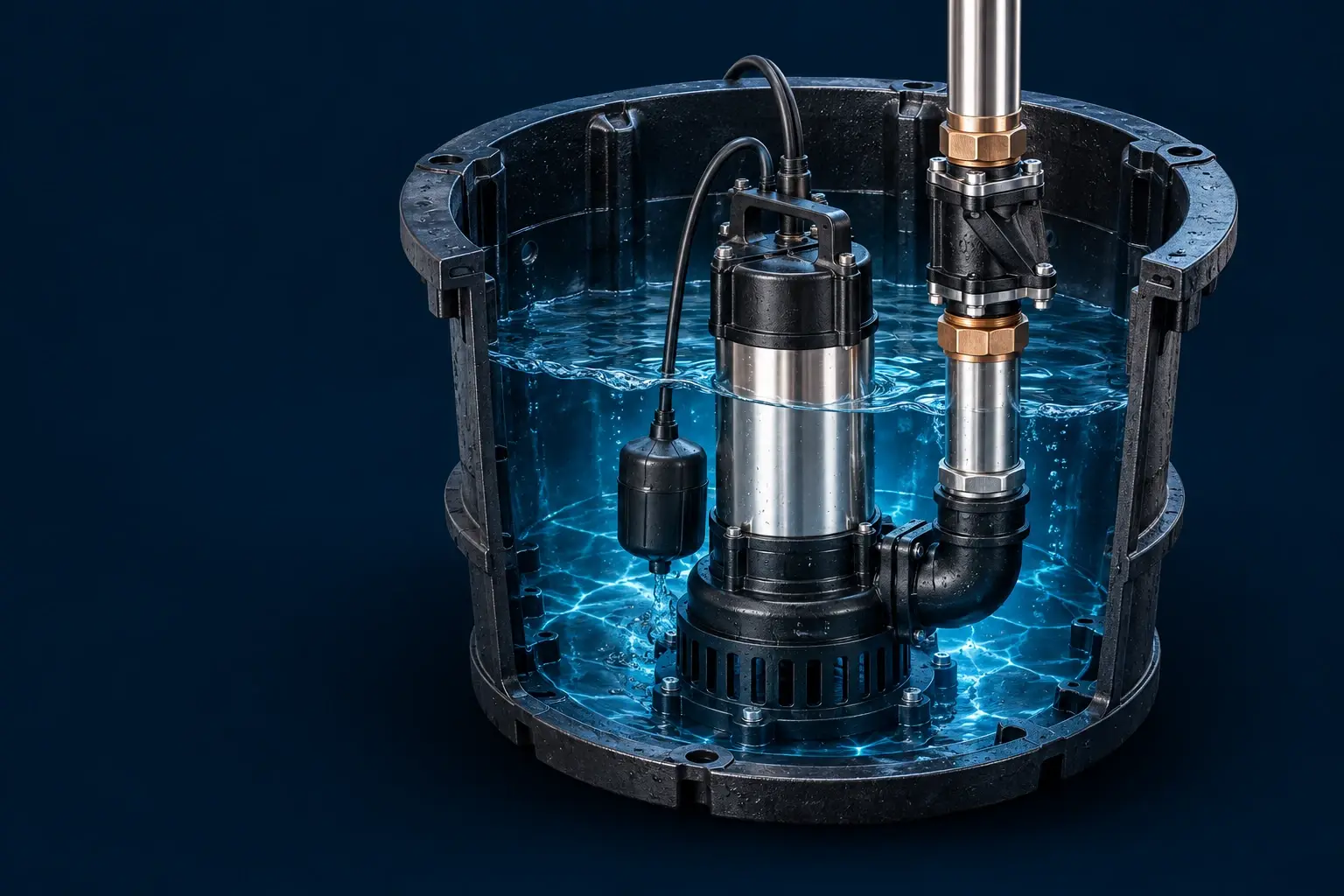
How does a sump pump protect a basement?
Water that collects around a foundation is channelled by weeping tile into a sump pit. When the water level rises, a float switch turns the pump on and moves the water out through a discharge pipe, away from the building. Without a working pump, that water has nowhere to go and can come up through the floor or the wall joints. Pumps work hardest at the worst times, such as heavy storms and spring thaw, and they are also the time they are most likely to fail if they are old, undersized or poorly installed. A properly sized pump, a clean pit, a correctly routed discharge line and a backup system give you layers of protection. We check each of these, not just the pump itself. Regular testing, especially before spring thaw and the heavy rain seasons, helps you catch problems early.
Signs you need a new or better sump pump
These point to a pump that is failing or not adequate:
- The basement has taken on water, even after a pump was installed.
- The pump runs constantly, cycles on and off rapidly, or makes unusual noises.
- The pump never seems to run, even in heavy rain.
- The pump is old, and you do not know when it was last tested or replaced.
- There is no backup if the power goes out or the pump fails.
- The pit has debris, standing water that does not clear, or a damaged lid.
Backup systems and what to do about power cuts
Storms that cause the most basement flooding often cause power cuts too, which can leave an electric pump useless exactly when it is needed. A backup system adds a second line of defence. Options include a battery-powered backup pump that takes over when the main pump fails or the power goes out, and a second pump set to start if water keeps rising. The right setup depends on how much water your property sees, the size of the pit, the discharge route and your tolerance for risk. A basement with finished space, valuable storage or a history of flooding usually justifies stronger protection. We explain the realistic options for your property, what each one covers and what it does not, so you can decide with clear information. Whatever you choose, it should be tested after installation so you know it works.
How we install or replace a sump pump
The installation is planned around your basement and drainage:
- We look at the pit, the drainage, the discharge route and the power supply.
- We recommend a pump and backup setup that suits the property.
- We install or replace the pump, float switch and discharge connection.
- We test the system by running water through it and checking operation.
- We show you how it works and how to keep it in good condition.
Homes, condos and commercial properties
Sump pumps are not only for houses. Condominium buildings and commercial properties often rely on pumps in garages, mechanical rooms and lower levels, where a failure can affect many people and a lot of equipment. In these buildings pump size, alarms, access for servicing and scheduling around residents or operations all matter. For homeowners, the priority is usually protecting a finished basement and the belongings stored in it. AT Plumbing & Drains installs, services and replaces pumps for all three property types across Toronto and the GTA. We can add a new pump where none exists, replace an aging one, or add a backup to an existing system. We keep you informed throughout and leave the area clean when the work is done. Because pumps are only one part of drainage, we also look at weeping tile and the discharge route.
What to have ready when you call
A few details help us understand the job quickly and give you useful guidance:
- The type of property: house, townhome, condominium unit or building, or commercial space.
- What you are seeing or hearing, and where in the property it is happening.
- When it started and whether it comes and goes, for example only after rain.
- Whether water is actively leaking, and if you can safely shut off the supply.
- Photos or videos of the problem, if they are easy to take.
Where we work
AT Plumbing & Drains serves Toronto and the whole Greater Toronto Area, including Mississauga, Brampton, Vaughan, Markham, Richmond Hill, Oakville, Burlington, Milton, Pickering, Ajax, Whitby and Oshawa. We work on residential homes and townhomes, condominium buildings managed by boards and property managers, and commercial, retail and industrial properties. If you are not sure whether we cover your location, call (647) 427-9797 or send a quote request, and we will confirm.
Last updated: